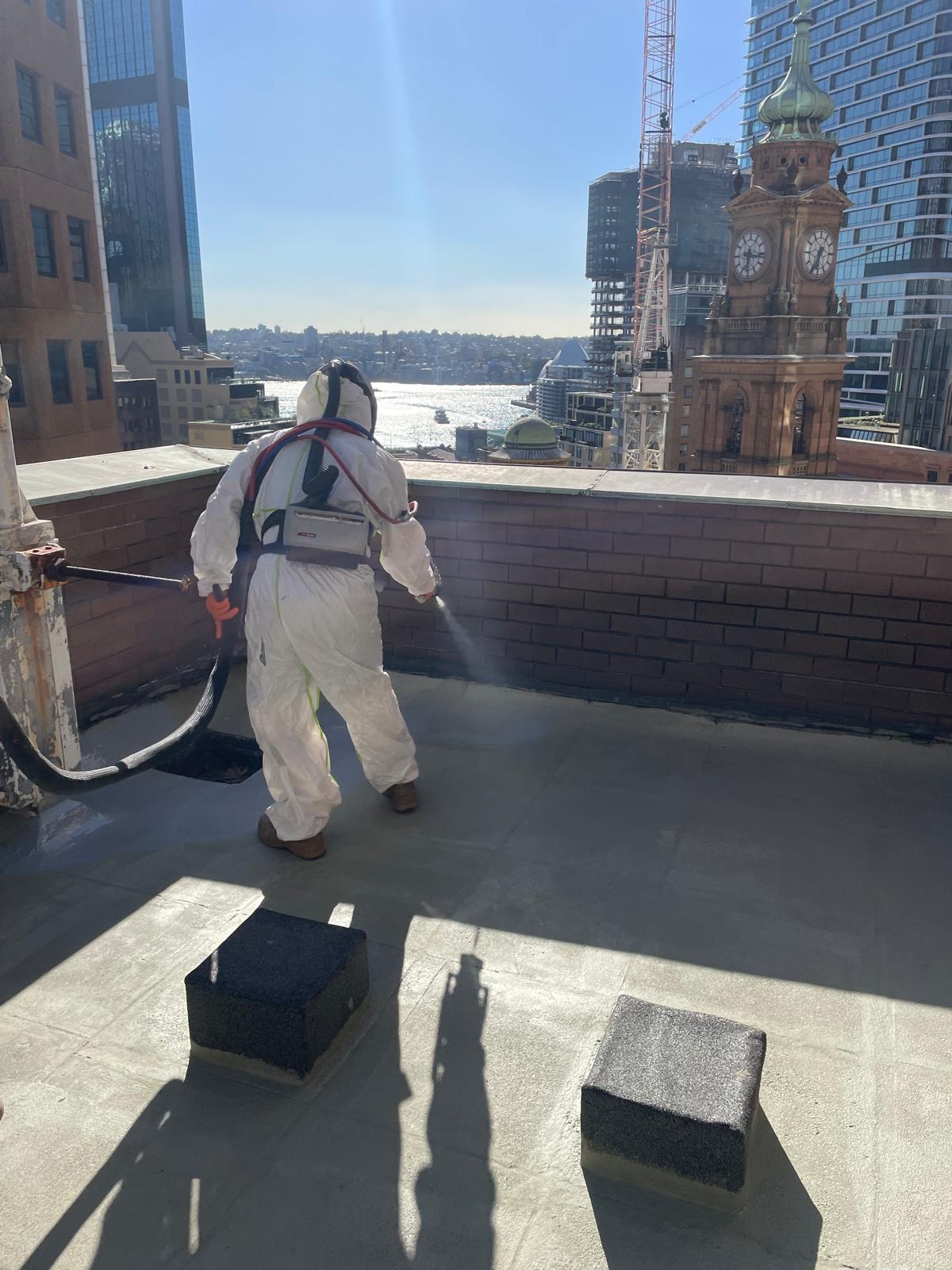
What are industrial protective coatings, and which surfaces need them?
Industrial protective coatings are specialist systems applied to existing concrete, steel, and masonry assets to restore structural integrity, resist chemical attack, prevent corrosion, and extend operational life. They form a new internal or external lining over the existing surface, without replacing the underlying asset.
The short answer to whether protective coating can be applied to an existing structure is yes. This is, in fact, the primary use case. Coating systems are designed to be applied in situ, to assets that are already in service, often without taking the asset offline at all. The coating goes on top of what is already there, adhering directly to prepared concrete or steel and forming a continuous, sealed barrier.
Yes, protective coatings prevent rust and corrosion. They do so by creating a physical barrier that excludes moisture, oxygen, and corrosive agents from reaching the underlying substrate. In sewer and wastewater environments specifically, corrosion is not caused by water alone. It is caused by hydrogen sulphide gas reacting with moisture to produce sulphuric acid, which attacks concrete from the inside out. A correctly specified coating system interrupts that process entirely.
The asset types that benefit most from industrial protective coatings include:
| Manholes and access chambers | Sewer pipes and wastewater assets | Treatment and process tanks |
| Primary containment tanks | Bunds and containment areas | Stormwater retention and detention tanks |
| Grease traps | Large pipework and culverts | Roof and exposed waterproofing areas |
| Sub-surface structural elements and piling | Industrial plant and equipment surfaces | Steel structures in corrosive environments |
If an asset is exposed to water, chemicals, corrosive gases, abrasion, or environmental degradation and has not been protected or its existing protection is failing, it is a candidate for coating. The question is not usually whether an asset needs protection, but how urgently and with which system.
How do I know if my asset needs protective coating?
Most coating failures do not announce themselves until significant damage has already occurred. Assets deteriorate from the inside and from the substrate outward, which means surface appearances can be misleading. By the time visible cracking, spalling, or delamination is apparent, the underlying structure may have been compromised for some time.
The warning signs that an asset requires assessment include:
| Visible corrosion or rust | Surface rust on steel or brown staining on concrete indicates moisture has penetrated the protective layer and is attacking the substrate. |
| Spalling or delamination | Concrete that is flaking, crumbling, or separating in layers has been compromised by chemical attack, freeze-thaw cycling, or structural movement. |
| Cracking or pitting | Fine surface cracks allow moisture and aggressive agents to reach the substrate. Pitting indicates active chemical attack, particularly in sewer environments. |
| Coating age | If the existing coating was applied more than 10 to 15 years ago without inspection or maintenance, it is likely approaching end of effective service life. |
| Chemical exposure history | Assets handling petroleum products, acids, salts, or industrial waste that have not been assessed for chemical resistance should be prioritised for inspection. |
| Odour or infiltration | Foul odours escaping from contained assets, or moisture infiltrating structures from the outside, indicate a breach in the containment barrier. |
The risk of waiting is not just accelerating deterioration. It is the potential for sudden, uncontrolled failure. Assets that fail catastrophically, particularly containment tanks, bunds, and sewer structures, create environmental incidents, regulatory exposure, and emergency shutdown costs that dwarf the cost of a planned coating program. Proactive assessment is always cheaper than reactive response.
At Hydro Logic, every project begins with a thorough condition assessment of the asset before any coating recommendation is made. The assessment determines the extent of deterioration, the chemical environment the coating must withstand, and the preparation work required before application. A quote without an assessment is not a quote. It is a guess.
How long does industrial protective coating last, and how often does it need replacing?
The service life of an industrial protective coating depends on three things: the quality of the system specified, the standard of surface preparation before application, and how accurately the coating was matched to the chemical and operating environment of the asset. When all three are done correctly, a properly applied protective coating system should deliver many years of service before any maintenance intervention is required.
The advanced polyurea coating system installed by Hydro Logic carries a 10-year manufacturer warranty and is engineered for a 50-year design life. That is not a marketing claim. It reflects the performance of a three-layer polyurea system specifically engineered for structural rehabilitation in corrosive, confined, and high-demand environments. The manufacturer stands behind the materials and the installation, which is a fundamentally different proposition from a single-layer coating backed only by the applicator.
Covering both materials and installation, backed by the manufacturer, not just the applicator.
Engineered for long-term structural performance in corrosive, high-demand underground environments.
Bond coat, structural foam infill, and sealed outer coat working together as an engineered system, not a surface finish.
Generic single-layer coatings, or systems applied without proper surface preparation and specification, typically require inspection and potential recoating within five to ten years. The difference in lifecycle cost between a well-specified system and a cheaper alternative is almost always negative when the full maintenance cycle is considered.
How often a coating needs replacing also depends on the environment. Sewer assets operating in high-sulphide conditions place far greater demand on a coating than a stormwater detention tank. A coating program should include periodic inspection, typically every five years for high-demand environments, to assess condition and identify any areas requiring spot maintenance before they become systemic failures.
How much does industrial protective coating cost, and is it worth the investment?
Industrial protective coating is priced on a project-by-project basis. The cost of any individual project is shaped by asset size, access conditions, the extent of surface preparation required, the coating system specified, and any site-specific safety or compliance requirements. There is no meaningful standard rate that applies across all projects.
What can be said with confidence is that protective coating is significantly more cost-effective than asset reconstruction or replacement in almost every scenario where it is viable. The comparison is not simply the cost of coating versus the cost of a new asset. It includes:
- The avoided cost of excavation, demolition, and disposal
- The avoided cost of operational downtime and process interruption
- The avoided cost of surface reinstatement around the asset
- The avoided risk of emergency shutdown if an unprotected asset fails
- The environmental and regulatory cost of an uncontrolled containment failure
- The extended service life delivered by a correctly specified coating, deferring or eliminating future capital expenditure
The question asset owners should be asking is not what does coating cost, but what does not coating cost. An unprotected asset that fails in service creates a problem that is always more expensive, more disruptive, and more time-consuming to resolve than a planned coating program would have been.
For Tier-1 contractors and government asset owners, there is an additional dimension: manufacturer-backed warranties change how protective coating work can be specified, valued, and reported. A 10-year manufacturer warranty provides a level of asset performance assurance that a standard applicator warranty cannot replicate, and that matters when accounting for maintenance liabilities across large infrastructure portfolios.
At Hydro Logic, every proposal includes a scoped assessment of the asset and a clear specification of the system being applied, so clients understand what they are paying for and what performance they are entitled to expect.
What should I expect from the application process?
The timeline for a protective coating project is driven by asset size, access configuration, the extent of preparation works required, and the coating system being applied. Straightforward single-asset jobs, such as a manhole or small containment tank, can often be completed within a day. Larger assets, more complex preparation requirements, or confined space environments will take longer.
The application process follows a consistent sequence regardless of asset type:
| 1 | Condition assessment | The asset is inspected to determine the extent of deterioration, chemical exposure history, and preparation requirements before any coating work begins. |
| 2 | Surface preparation | High-pressure water jetting, mechanical scarification, or abrasive blast cleaning removes existing coating, corrosion products, and contamination. This is the most critical step. A coating applied to a poorly prepared surface will fail prematurely regardless of product quality. |
| 3 | Substrate repair | Cracks, voids, and areas of structural loss are filled and reinstated before coating application. The coating is a protective finish, not a structural repair in isolation. |
| 4 | Coating application | The specified system is applied in accordance with manufacturer requirements and engineering specifications. For polyurea systems, application is spray-applied and cures within seconds, allowing rapid return to service. |
| 5 | Quality verification | Holiday testing, thickness measurement, and visual inspection confirm the coating has been applied to specification. Documentation is provided as part of the project record. |
| 6 | Return to service | Fast-curing systems such as polyurea allow assets to return to service far sooner than traditional epoxy or cementitious systems, minimising operational disruption. |
Hydro Logic regularly delivers coating works within complex permit-controlled and high-risk environments, integrating with client permit-to-work systems, confined space protocols, and Tier-1 contractor safety management frameworks. Coordination with your site safety system is part of our standard scope, not an extra.
What is the right coating system for my environment?
The most common question asset owners ask when comparing protective coatings is whether epoxy, polyurethane, or polyurea is the best option. The answer is that the right system depends entirely on the specific demands of the asset and its environment. Material selection is an engineering decision, not a product preference.
Here is how the principal coating types compare across the conditions most relevant to industrial and civil infrastructure:
| Epoxy coatings | Polyurethane coatings | Polyurea systems | |
|---|---|---|---|
| Strengths | Strong adhesion to concrete and steel. Good chemical resistance for moderate exposure environments. Cost-effective for above-ground applications. | More flexible than epoxy. Good UV resistance for exposed applications. Handles moderate thermal movement. | Extremely fast cure. Moisture-insensitive during application. Superior flexibility and elongation. Exceptional chemical and abrasion resistance. Seamless, joint-free finish. |
| Limitations | Brittle under structural movement. Slow cure. Performs poorly in wet conditions during application. Not suited to dynamic or high-movement assets. | Moisture-sensitive during cure. Not suited to high-chemical environments. Slower cure than polyurea. Limited performance in immersed or sewer conditions. | Requires specialist spray equipment and trained applicators. Higher upfront cost than single-layer alternatives. |
| Best suited to | Industrial floors, above-ground tanks, and moderate-duty containment in stable environments. | Roof waterproofing, exposed surfaces, and light industrial applications with UV exposure. | Sewer and wastewater assets, underground infrastructure, containment, piling, high-chemical and confined environments. The only system with a 10-year manufacturer warranty in Australia. |
On high-temperature environments specifically: polyurea systems are engineered to perform across a wide temperature range and are appropriate for many industrial plant applications. For extreme thermal cycling or very high process temperatures, system selection requires a specific engineering assessment of the operating conditions. Hydro Logic works alongside engineers and chemists to assess each environment and specify the appropriate system.
The advanced polyurea coating system, available exclusively through Hydro Logic on the East Coast of Australia, is a three-layer platform comprising a bond coat, structural foam infill, and sealed outer coat. It is the only manufacturer-warranted integrated coating system available in the Australian market, and the only system where the manufacturer controls training, certifies installers, engineers the specification, and warranties both the material and the installation.
No other coating contractor in Australia can offer a manufacturer-backed warranty on an integrated structural protective coating system. If warranty coverage and long-term asset performance assurance matter to your procurement or maintenance specification, that distinction is decisive.
Hydro Logic works with engineers, asset owners, councils, and Tier-1 contractors across Australia to assess, specify, and deliver industrial protective coating solutions for assets where the environment is demanding, access is restricted, and performance standards are non-negotiable.